

Darth Vader’s piercing red eyes and Michelangelo’s eclectic shades of blue paint the barranquero into nature’s elite beauty list.
Most Colombians have never seen a barranquero in person. I haven’t either, until recently, when I was living on the hilltops of Medellín.
Unlike the few times I visited the Galapagos Islands without a telephoto lens, I was thrilled to have a Canon R100 and an RF-S45-210mm lens with me here. Beginner camera system—yes. But I had more confidence in this camera than Taylor Swift on tour.
A few months after first seeing the barranqueros, I said to myself, “I think I need to know what they’re called in English.”
Amazonian Motmot.
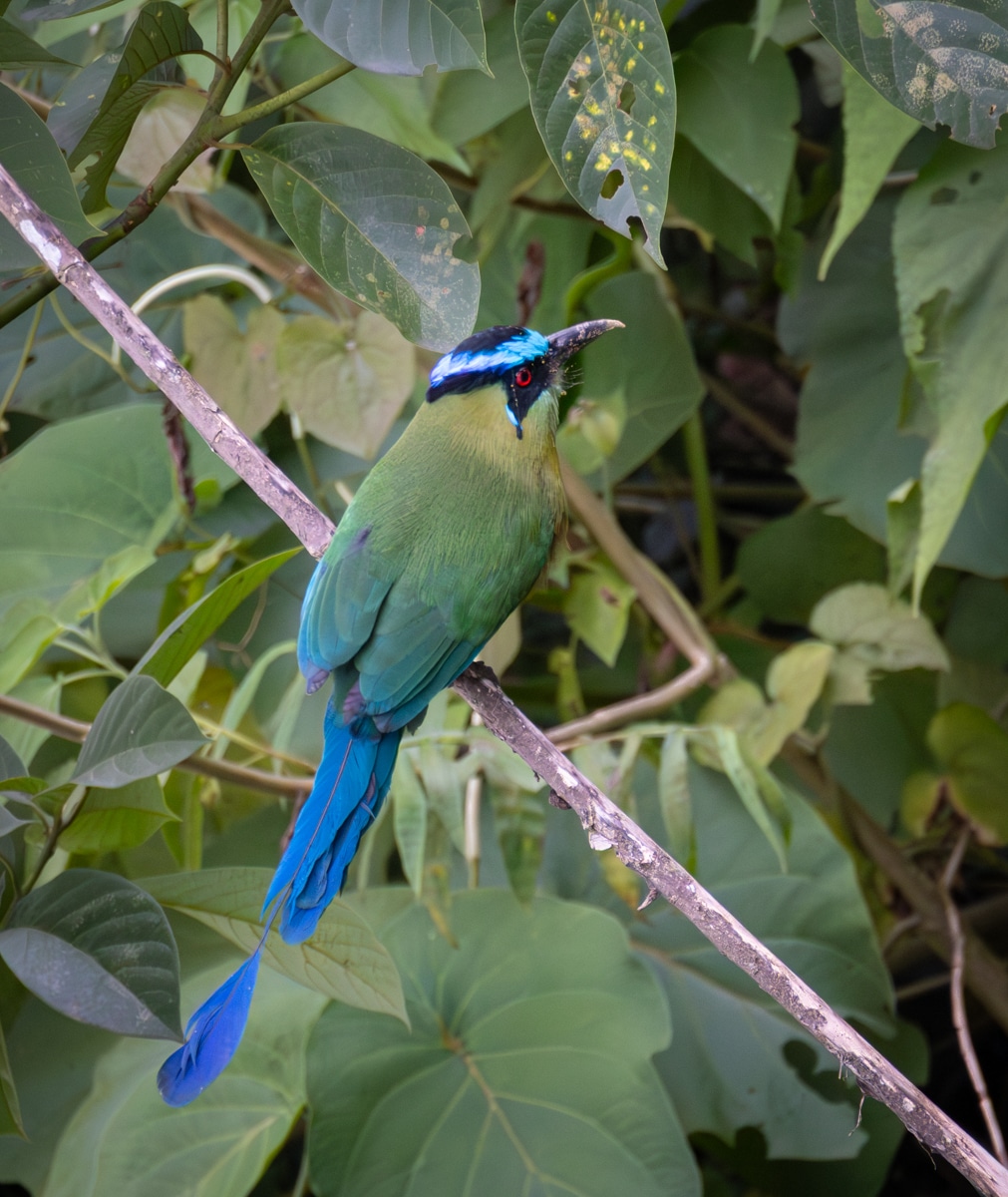
One mating pair lived down below at the entrance of the house in front of the gate. Up the driveway, the other pair lived had their nest right outside my bedroom, about 10 meters away. Studies suggest the Amazonian motmots try to keep the same partner.
I was fortunate; I didn’t need to hike or go full camo mode to photograph the Amazonian motmots. I took my bird photography to the next level—no more pigeons.
Amazonian motmots nest on the side of hills, as their Spanish name, barranquero, loosely translates to ravine dweller. Since my bedroom was at the same altitude as the nest and there was not much leafy obstruction, getting clear shots felt like cheating.
I could even have used my iPhone to get sharp images of the Amazonian motmot. But the supernerd in me needed a camera with more reach.
Furthermore, not having to worry about my camera gear getting stolen while in the comfort of my home was a bonus in Colombia.
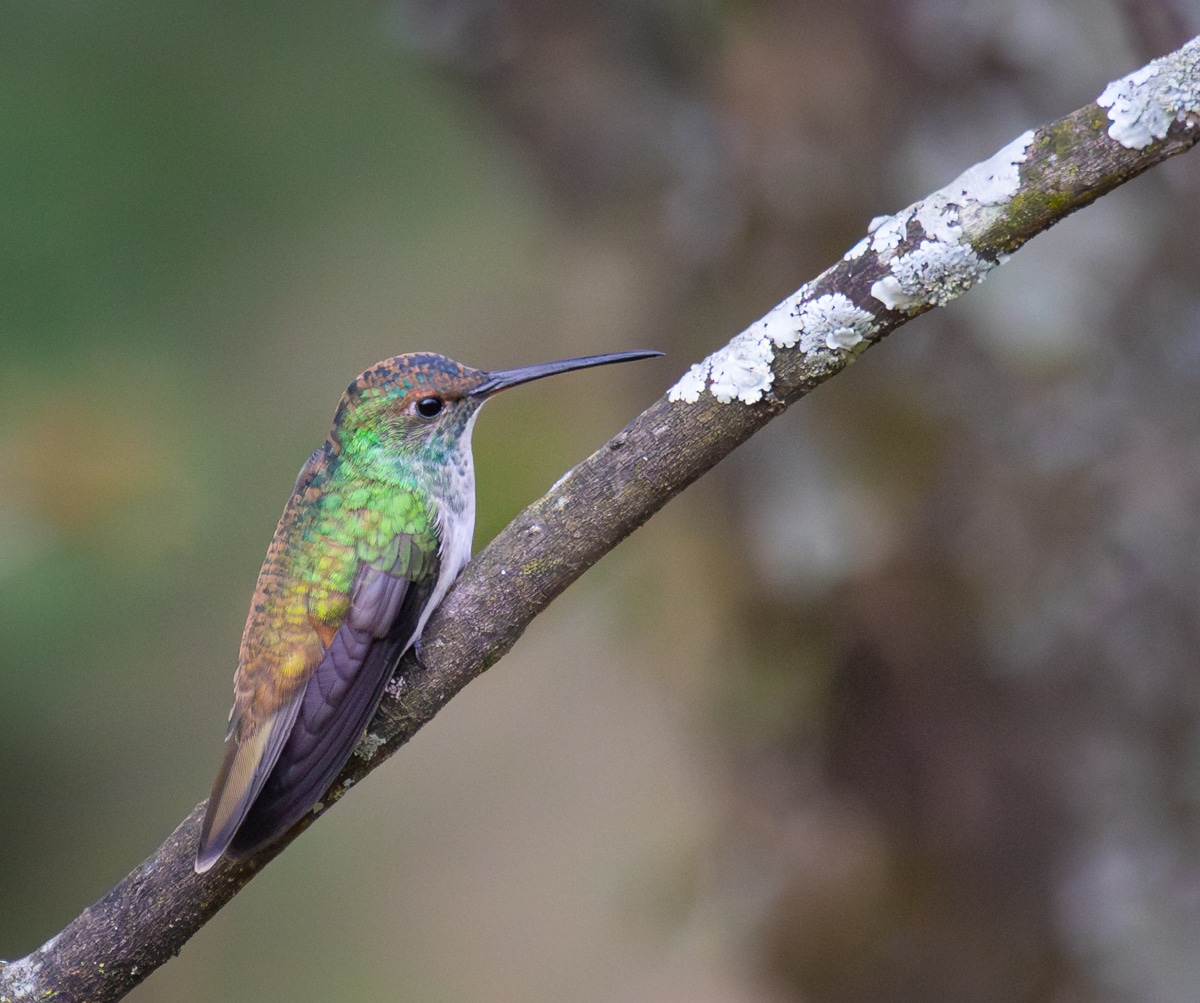
There were also other gorgeous birds in the vicinity, including the Andean emerald hummingbird, the tropical kingbird, and the red-breasted meadowlark. The latter, I had a hard time getting decent shots of it.
