
Last updated on November 12th, 2024 at 11:16 pm
Have you ever found yourself pondering whether your checked luggage might be rummaged through for illicit substances during a flight? You’re certainly in good company with that curiosity, especially considering marijuana is legal in many countries.
It’s a topic that sparks a lot of interest but doesn’t lend itself to easy answers.
In this blog post, we’ll explore the realities of drug searches at airports. We’ll also share some practical tips to ease your mind and help ensure your luggage stays secure and untouched during your travels.
Related:
- What Can You Bring on a Plane in Checked Luggage
- Can You Pack a Knife in Checked Luggage?
- What is the 3-1-1 Rule at Airports?
Do checked bags get searched for drugs?
There’s a lot of chatter about checked bags being searched for drugs, especially with recent stories making the rounds in the news. But how much of this is hype, and how much reflects the daily workings of airport security?
Surprisingly, while airport security remains vigilant, the reality is that most checked baggage isn’t actively searched for drugs. This doesn’t mean airports are lax about security — in fact, they’re always using the latest technology and intelligence to keep airports safe. However, most luggage passes through without a hitch unless there’s a specific reason to take a closer look.

How often do checked bags get searched?
It may surprise you to learn that only about 4% of all checked bags undergo screening for substances such as drugs, explosives, and other hazardous materials. This might leave you questioning the reasons behind this low percentage.
The primary factors involve the allocation of resources and the prioritization of threats.
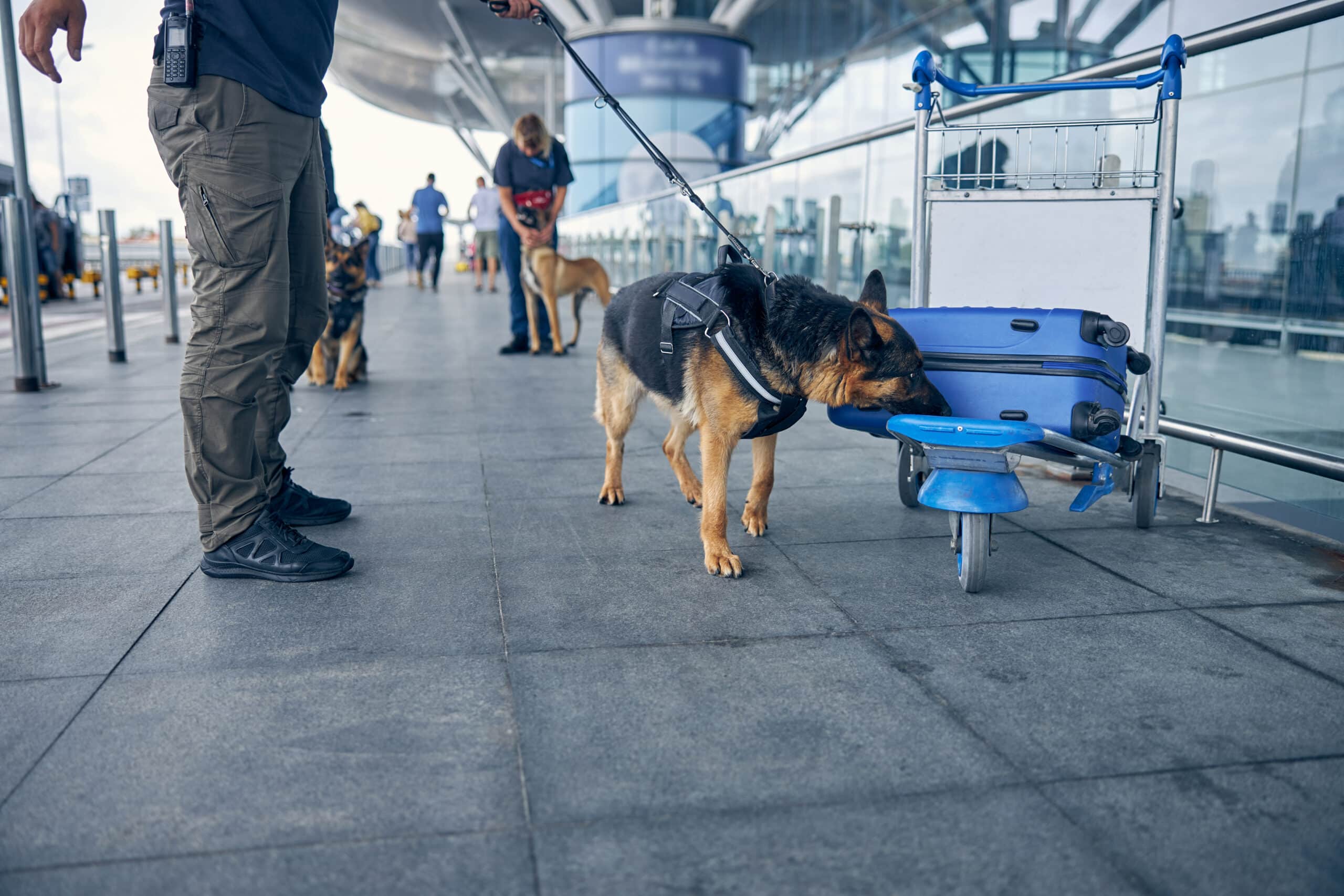
Given the vast number of travelers passing through airports daily, the utilization of search resources, including drug-sniffing dogs, must be strategic. Perhaps you’ve noticed that these dogs aren’t stationed throughout every corner of the airport.
Airport security focuses on ensuring the utmost safety of employees and passengers, an objective achieved more effectively by concentrating on threats deemed higher risk, such as weapons or explosives.
This isn’t to say that your bag will never be searched. If airport security has a significant suspicion that a checked bag might contain illicit substances, they may decide to conduct a search.
However, more often than not, an agent may simply ask a few questions to assess any concerns before allowing you to proceed. Understanding these procedures can ease the minds of travelers, knowing that significant efforts are in place to ensure their safety while balancing efficiency and resource management.

What You Can Do To Protect Yourself
Traveling can stir up a mix of excitement and anxiety, especially when it comes to navigating airport security. While it’s rare for your baggage to be thoroughly searched, a little preparation can ease your worries. Here’s some practical advice from a travel enthusiast’s perspective:
- Stay Calm: It helps to remember that the vast majority of bags aren’t scrutinized for illegal substances. So take a deep breath and try to enjoy the journey ahead. Rest assured, as long as you’re not packing anything you shouldn’t, you’ll be free to explore the world without unnecessary stress.
- Travel Light: A streamlined suitcase not only makes for quicker navigation through busy terminals but also reduces the chances of garnering extra attention at security checkpoints. Fewer items in your bag generally mean a more straightforward screening process.
- Be Transparent: Honesty really is the best policy. If the security team has questions about your belongings, answering truthfully can help smooth the process. Being open and forthcoming helps to build trust and can make your passage through security far more straightforward.
- Think Ahead: If you’re carrying items that might raise eyebrows, consider storing them in your carry-on. This keeps them within your view and control during your flight and can help mitigate any potential issues.
Frequently Asked Questions
How do airports search luggage for drugs, and what are they looking for specifically?
The Transportation Security Administration (TSA) employs several methods to ensure that our journeys remain safe and secure.
Your bags will primarily undergo X-ray screening, a highly sophisticated process that allows agents to see inside luggage without physically opening it. The X-ray machine searches for unusual shapes or patterns that might suggest illegal items. If something warrants closer investigation, the luggage is taken aside for a more detailed inspection.
Another layer of security involves sniffer dogs, trained specifically to detect the scent of drugs. Their acute sense of smell can be invaluable in identifying concealed substances.
In some cases, trained TSA agents carry out manual searches, looking for typical indicators of drug concealment, such as packets of unusual substances or particular packaging styles.
What kind of penalties can you face if your bag is found to contain illegal drugs?
Possession of illegal drugs can lead to severe penalties that vary based on the type and amount of drugs found. At best, minor infractions could result in fines or probation.
However, larger quantities or a previous history of offenses could result in imprisonment. Some of the worst legal repercussions include asset forfeiture — where anything deemed part of the drug trade could be seized.
Awareness is key in a traveler’s journey. For countries like China and Indonesia, the stakes are incredibly high, with drug trafficking punishable by the death penalty. Always prioritize your freedom and safety over anything else, and remember that making smart decisions can save you from dire outcomes.
Can you bring drugs (medication) on a plane in your carry-on luggage instead of your checked luggage?
It is perfectly safe to bring medication in your carry-on luggage when flying. It is often a good idea to keep your medication with you rather than checking it in case your luggage gets lost.
However, there are a few things to keep in mind when packing medication for a flight. Be sure to pack the medication in its original container, with the prescription label clearly visible, and pack enough medication for the entire trip, plus a few extras in case of delays.
What drugs do sniffer dogs smell?
Sniffer dogs are trained to detect a wide range of illegal and controlled substances, including narcotics, explosives, and contraband.
To do this, they rely on their highly acute sense of smell. Dogs have around 300 million olfactory receptors in their noses, compared to just six million in humans. This allows them to detect odors at concentrations up to 100 times lower than what humans can perceive. When a dog smells a particular substance, it will alert its handler by sitting down or lying down.
This behavior is known as a passive alert and is used to indicate the presence of an odor without revealing its exact location. Sniffer dogs are able to detect a wide range of drugs, including marijuana, cocaine, methamphetamine, and heroin.
They can also be trained to detect specific chemicals used in the manufacturing of drugs, such as ephedrine and pseudoephedrine.